Size, light and getting there
How high is Niagara Falls?
Height, width and flow of Niagara's three waterfalls, plus how the night lights work and what to sort out before an evening visit from the Canadian side.
Reserve your night at the falls ↗Quick answer
Yes, Niagara Falls is as big as it looks. Horseshoe Falls, the largest of the three waterfalls, stands about 57 metres high and about 790 metres wide, and more than 168,000 cubic metres of water go over the crest every minute at peak daytime hours. After dusk, floodlights make the falls glow in colour, which is why an evening visit is so rewarding.
The three falls
| Fall | Size |
|---|---|
| Horseshoe Falls | About 57 m high, 790 m wide |
| American Falls | 21 to 30 m drop, 320 m wide |
| Bridal Veil Falls | The smallest of the three |
| Peak daytime flow | Over 168,000 m3 a minute |
| Visitors a year | More than 20 million |
Three waterfalls, one gorge
Niagara Falls is a group of three waterfalls at the southern end of Niagara Gorge, spanning the border between Ontario and New York. Horseshoe Falls is the largest and is also called the Canadian Falls. American Falls and Bridal Veil Falls lie within the United States. Bridal Veil Falls is separated from Horseshoe Falls by Goat Island and from American Falls by Luna Island. From the Canadian side you see all three at once, which is why most visitors base themselves in Niagara Falls, Ontario. The falls sit about 27 kilometres from Buffalo, New York, and 69 kilometres from Toronto, so an evening visit is easy to build into a longer trip around either city.
How high and how wide
Horseshoe Falls stands about 57 metres high and about 790 metres wide, and it is the waterfall in most of the classic tourist photos. American Falls varies between 21 and 30 metres in drop, because of giant boulders at its base, and is about 320 metres wide. The distance from the American end of the falls to the Canadian end is 1,039 metres. If you search for the height in feet, that is about 187 feet for Horseshoe Falls.
How much water
During peak daytime tourist hours, more than 168,000 cubic metres of water goes over the crest every minute, the highest flow rate of any waterfall in North America. Around 90% of the Niagara River goes over Horseshoe Falls. The water looks green because of an estimated 60 tonnes a minute of dissolved salts and rock flour, finely ground rock produced by the river's erosive force. The flow is a direct function of the Lake Erie water level, and it typically peaks in late spring or early summer. During the summer months, at least 2,800 cubic metres a second go over the falls, and the average annual flow rate is 2,400 cubic metres a second, which gives a sense of how much power the river carries.
Do the falls run at night?
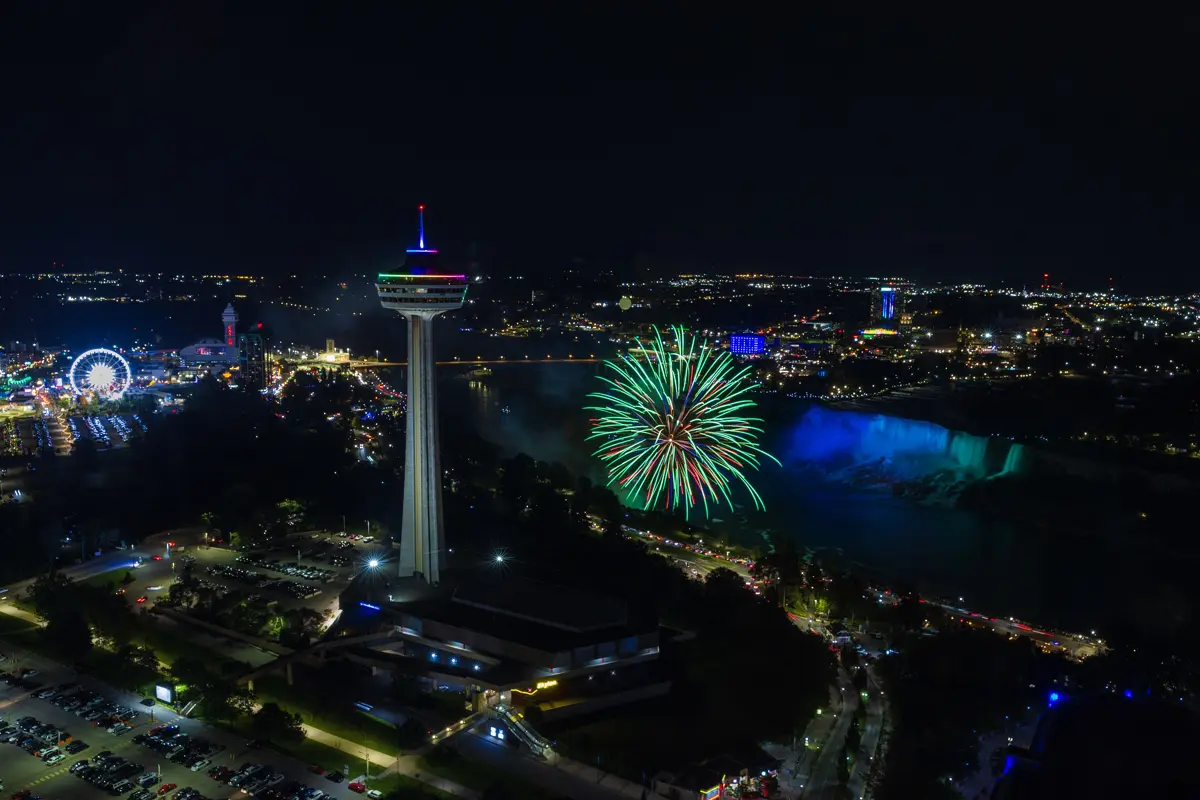
Yes, though the flow is lower. A 1950 treaty between the United States and Canada allows more water to be diverted for power at night and in winter, when fewer visitors are looking, while requiring minimum flows during the day and the tourist season. The falls still thunder after dark, and the lights make the spray glow. That is the idea behind a night visit: the same big view as the day, in colour, and with fewer people looking. Niagara is both a daytime and an evening attraction.
How the lights work
Niagara Parks explains that special lights are housed in the Illumination Tower next to Queen Victoria Place, on the roof of Table Rock Centre at the brink of Horseshoe Falls, and deep in the gorge across from American Falls. In 2016 the older Xenon lights were replaced with energy-efficient LED technology that gives more than twice the previous lighting levels, programmable lighting and a wider range of colours. The illumination has been financed and operated by the Niagara Falls Illumination Board since 1925. Niagara Falls Tourism adds that the falls were first lit in 1860 to honour a visit from the Prince of Wales, and that the 2016 system uses 100 LED panels with 60% less energy than the Xenon spotlights it replaced.
Colours and special nights
The falls are often lit in custom colours for short periods, marking significant dates for registered charities and causes, with the Niagara Falls Illumination Board providing the special colours. Niagara Parks publishes the schedule, so you can see whether a cause you care about is lit during your stay. The premium night tour goes one step further: its itinerary includes a visit to the Illumination Tower with the chance to control the lights on the falls, and you leave with a certificate.
When the lights come on
The falls are lit every night of the year, starting after the sun sets, so the start follows the seasons. Niagara Parks publishes a month-by-month schedule on its Falls Illumination page, and it is worth a quick look when you plan your dates. In winter dusk arrives earlier, which means you can see the lit falls without a very late night. In summer you need to wait longer for full darkness, and the fireworks fit around that.
Fireworks at Niagara
Niagara Falls Tourism describes the fireworks as Canada's longest-running series, lighting the sky all summer, during the Winter Festival of Lights and on select holidays. The standard show lasts five minutes and is free to watch from public spaces along the parkway. Viewing from a paid attraction means buying that attraction's ticket. Fireworks and weather go together, and the operator says it cannot guarantee a display or its timing. Weather permitting, a cruise gives you the view from the water, which is the option the premium night tour uses in season.
Getting there from the American side
The premium night tour collects guests from hotels in downtown Niagara Falls, Canada, and cannot pick up on the American side. If you are staying in New York, plan to cross first. Niagara Falls Tourism says a US citizen over 16 needs a passport, passport card or enhanced driver's licence to enter Canada, and that other travellers should check the Canada Border Services Agency rules for their own passport before they leave. Border queues vary, so give yourself generous time on the way over.
Planning your evening
The simplest plan is to settle dinner, the lit falls and one highlight. The free illumination is visible from along the parkway, so even a short stroll after dinner shows you the colours. Add the fireworks cruise for the view from the water, which includes a complimentary mist poncho, or choose Power Station at Night for an indoor lights-and-sound visit with a tunnel to a viewing platform. The guided premium night tour combines dinner, the Illumination Tower and, from May to October, the boat, with hotel pickup, so nothing needs organising on the night.
Who this isn't for
If you only want the numbers, a daytime walk along the parkway shows you the falls for free. If you prefer to eat at your own pace, an independent evening with the free illumination suits you better than a four-hour tour with a set dinner stop. And if you are staying on the American side and would rather not cross the border, the lit view from New York is a different, perfectly good evening.
Frequently asked questions
How high is Niagara Falls?
Horseshoe Falls, the largest, is about 57 metres high. American Falls varies between 21 and 30 metres in drop because of boulders at its base. Bridal Veil Falls is the smallest of the three.
How wide is Niagara Falls?
Horseshoe Falls is about 790 metres wide and American Falls is about 320 metres wide. The distance between the American and Canadian ends of the whole group of falls is 1,039 metres.
Is the Niagara Falls illumination free?
Yes. Niagara Falls Tourism says the illumination is free to watch every night of the year from public park spaces along the Niagara Parkway. Viewing from an attraction such as a tower needs that attraction's ticket.
When do the lights come on?
They come on after sunset every night of the year. Niagara Parks publishes a month-by-month schedule on its Falls Illumination page, so check it for your dates.
Why do the colours change?
The Niagara Falls Illumination Board reviews special lighting requests that support charities and mark important dates. Those custom colours last for short periods, and the usual lighting returns afterwards.
How much water goes over Niagara Falls?
At peak daytime tourist hours, more than 168,000 cubic metres goes over the crest every minute. Around 90% of the Niagara River flows over Horseshoe Falls.
Sources